Home > Critical notes > From Quisquiza (09 of 20)
From Quisquiza (09 of 20)
Compost
Heat Inside Rot
This note is part of a series written from Quisquiza, in the high-Andean cloud forest of Colombia, where ecological restoration and research now unfold side by side. It reflects on how living and working within this terrain gradually reshapes the way I think about memory, information, and the infrastructures built to sustain them. Check all the notes in this section's index.
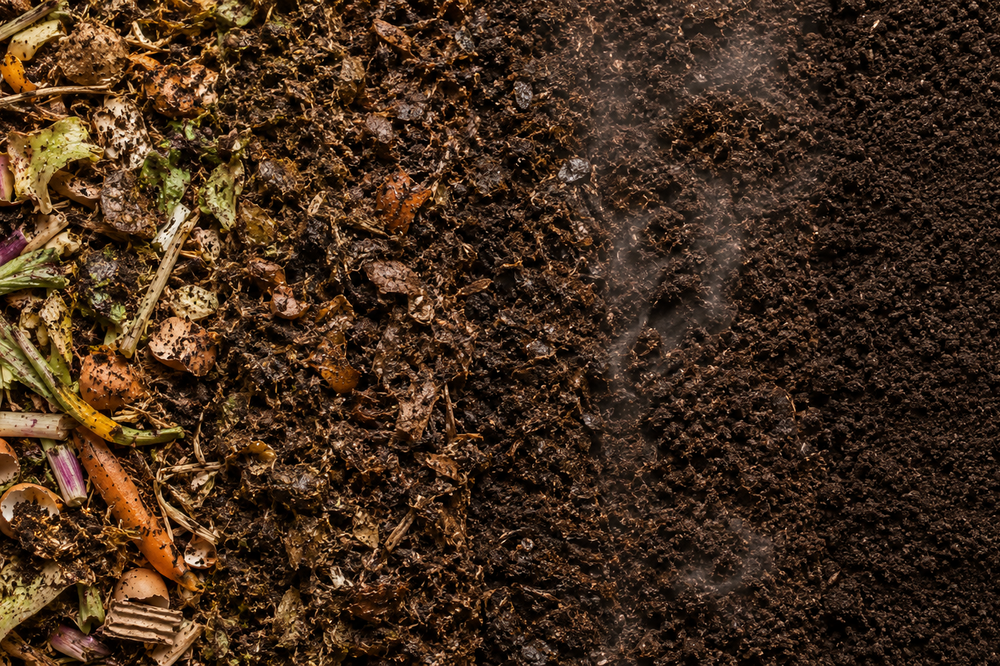
The compost pile steams in the early morning cold.
At first, I think it is fog.
Here in Quisquiza, that would not be strange. Fog enters the kitchen, the sleeves, the notebooks, the boots, and anything else left unattended for more than a few minutes. But this vapor rises from the pile itself: kitchen scraps, dry leaves, cut grass, coffee grounds, ash, soil, vegetable peels, cardboard, and several substances I prefer not to identify before breakfast.
Rot, apparently, has temperature.
(And flies. Of course. Around my face, around the fork, around the bucket, around the idea of rural dignity.)
From a distance, compost looks like accumulation. Up close, it is a sequence of transformations. Bacteria multiply. Fungi move through softened material. Insects open passages. Larvae reduce what still has shape. Moisture shifts. Heat gathers. Oxygen disappears where the pile compacts.
Structure breaks down unevenly. Leaves darken first. Vegetable scraps lose their edges. Fibers loosen. Stems resist for weeks and then suddenly give way. What was recognizable becomes ambiguous. The pile sinks inward: the internal architecture is changing.
Decomposition is not simple destruction. It is the conversion of form into availability.
Matter is not preserved as itself. It is opened, fragmented, digested, aerated, recombined. A peel does not remain a peel. A stalk does not remain a stalk. Their former identities become irrelevant to the work they begin to perform in the pile.
(Not always elegantly. Some mornings the pile has very little interest in elegance.)
Ecology depends on these processes. Disturbance releases material; decomposition determines whether that release becomes available to future growth. A fallen branch, a dead root, frost-burned leaves, the remains of a failed planting: none of these produce renewal by virtue of having collapsed. Collapse only creates the possibility of redistribution.
The conditions matter. Without air, the pile turns anaerobic. Without moisture, microbial activity slows. Without carbon, the balance shifts. Without nitrogen, the process weakens. Without periodic turning, the pile compacts and heat concentrates badly. Decomposition requires management, but not control in the rigid sense. It requires attention to process.
Archives and institutions face a similar problem, although they often describe it with cleaner vocabulary.
Records decay. Formats become unreadable. Cataloguing decisions age badly. Mandates change. Funding cycles interrupt continuity. Staff leave with practical knowledge that was never documented. Platforms remain technically functional while becoming increasingly unusable. Classifications preserve historical violence beneath administrative stability.
Institutional breakdown is rarely sudden. It accumulates.
The visible failure often appears late: the inaccessible database, the unusable finding aid, the obsolete format, the collection no one can interpret, the community archive stranded after a grant ends. By that point, the underlying conditions have usually been deteriorating for years.
The common response is surface repair. A new interface. A migration project. A terminology update. A policy revision. These may be necessary, but they do not by themselves address the substrate. They do not explain how the system metabolizes its own failures, residues, obsolete forms, abandoned decisions, and accumulated contradictions.
Preservation cannot mean holding every structure in place indefinitely. Some of them have to be dismantled. Some categories have to be retired. Some descriptions have to be rewritten. Some projects should not be continued in their original form. The question is whether institutions have mechanisms for turning such breakdown into usable knowledge.
That is where the less visible infrastructures matter: documentation of decisions, version histories, migration records, maintenance routines, repair protocols, shared technical knowledge, succession planning, local vocabularies, explicit records of uncertainty, and honest accounts of what failed.
These are the conditions under which institutional decomposition becomes productive rather than merely corrosive.
Without them, decay remains decay. Files survive without context, metadata persists without interpretive value, digital objects remain stored but effectively dead, collections stay intact while becoming less intelligible, and institutional memory thins, even as storage expands.
With them, breakdown leaves material that can be worked through. Failed projects become evidence, obsolete systems become histories of decisions, damaged classifications reveal pressure points, and migration is no longer treated as technical housekeeping, but as part of the archive's own biography.
Someone still has to turn the pile.
Someone has to notice where it is too wet, too dry, too dense, too cold. Someone has to add dry matter when the pile turns sour, green matter when activity slows, air when compaction begins. This is not dramatic work. It is repetitive, material, and easy to undervalue because it does not resemble innovation. But continuity often depends on exactly this kind of labor.
Up here, the compost keeps steaming. By noon it will look ordinary again: dark, damp, uneven, full of fragments still halfway between one form and another. Nothing about it suggests completion. The pile is not a finished object. It is a managed transition.
I push the fork in. The surface opens. Heat rises from the part that is already breaking down.