Home > Blog The Log of a Librarian > Community-Centered Librarianship With a Decolonial Turn (08)
Community-Centered Librarianship With a Decolonial Turn (08)
Listening to the Margins
Serving the Unheard
This post is part of a series that reclaims community-centered librarianship from its institutional distortions, returning it to its roots in struggle, mutual aid, and collective survival. It treats libraries not as neutral services but as contested infrastructures shaped by power, resistance, and memory, and explores librarianship as solidarity work grounded in real communities, real conflicts, and the ongoing tension between institutional control and collective autonomy. Check all the posts in this section's index.
The Problem with "Giving Voice"
In institutional discourse, work with marginalized communities is often described through the language of voice. Libraries, archives, museums, universities, NGOs, and cultural institutions claim to "give voice" to those who have been excluded, silenced, ignored, or pushed to the margins.
The intention may be generous. The formulation is not.
To say that an institution "gives voice" assumes that voice is granted from the outside. It places the institution at the center of the act, as if marginalized people were silent until an authorized space allowed them to speak. It converts listening into benevolence and makes recognition appear as an institutional gift.
But marginalized communities are not voiceless.
They speak, remember, name, interpret, organize, warn, refuse, mourn, teach, and transmit. And they do so in ways that may not fit professional formats or institutional expectations, but that does not make those forms absent. It only makes them easier to ignore.
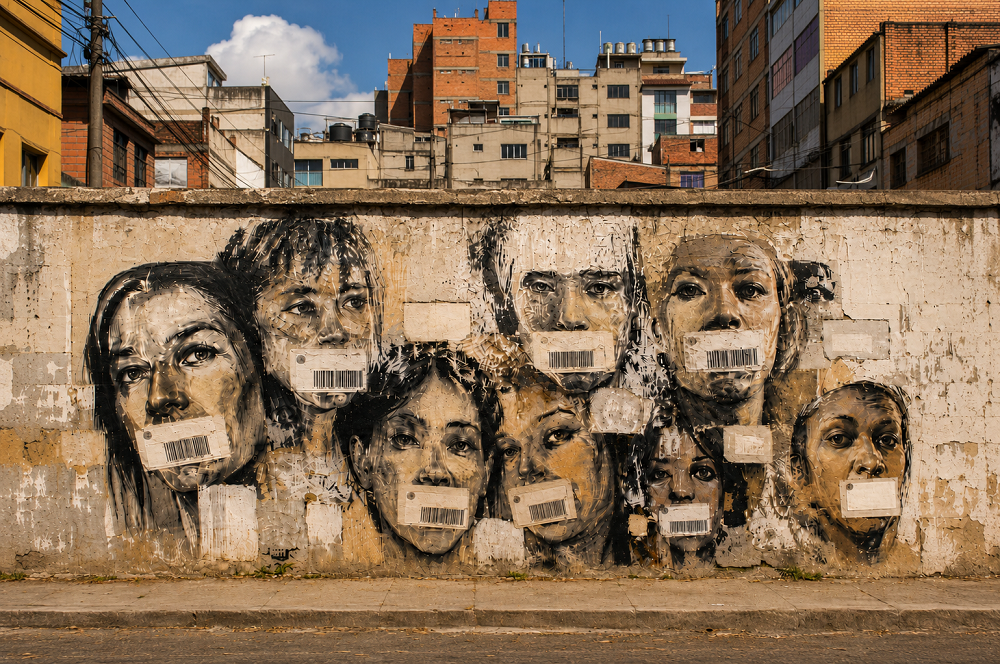
The problem is not the absence of voice. The problem is the organization of inaudibility.
Some voices are not heard because they do not enter recognized formats. Others are heard only after being translated into institutional language. Others are treated as anecdotal, emotional, excessive, or insufficiently documented. Some are requested only when they can support a project, exhibition, report, grant application, or public statement. Some are ignored because they disturb the official version of reality.
In this sense, the task of community-centered librarianship is not to give voice to the unheard. It is to confront the structures that decide whose speech becomes intelligible, usable, legitimate, or safe to ignore.
Margins Are Produced
The term "margins" can be misleading if it is treated as a natural location. It can suggest that some people simply live at the edge of society, as if marginality were a social geography rather than a political condition.
But margins are produced.
They are produced by poverty, racism, colonial histories, gendered violence, migration regimes, linguistic hierarchies, bureaucratic exclusion, and institutional neglect. They are also produced by knowledge systems: by the categories that classify people, the vocabularies that name them, and the procedures that decide whether their experiences count as evidence.
Libraries are not outside these processes. They participate in them.
A collection can marginalize by excluding materials. A catalog can marginalize by using imposed names. A classification scheme can marginalize by breaking coherent worlds into unrelated categories. An access policy can marginalize by requiring documents, language, digital skills, or behavioral codes that some people cannot or should not have to perform.
For that reason, listening to the margins cannot mean approaching marginalized groups as objects of attention. It requires asking how the library itself participates in the production of marginality.
Who has been made difficult to find? Who has been described from outside? Who appears only as a problem, a target group, a beneficiary, or a case? Who is present only after being translated into categories that do not belong to them?
These questions matter because community-centered librarianship cannot serve the unheard without examining how unheardness is produced.
Listening begins there. Not with an invitation to speak, but with an analysis of the conditions that have made some speech illegible, risky, or disposable.
Listening Is Not Inclusion
Listening is often confused with inclusion.
An institution may invite marginalized people to share their stories, participate in consultations, contribute to collections, attend programs, or appear in public events. These initiatives may create real openings. They may also reproduce the same structures they claim to challenge.
The problem is not that inclusion is useless. The problem is that inclusion can leave authority untouched.
A library can include marginalized voices while retaining control over the frame. It can decide the topic, the format, the language, the descriptive categories, the level of visibility, the terms of access, and the final use of what is shared. It can invite people to speak without allowing them to define what their speech means within the institution.
In such cases, listening becomes a managed event.
The community is heard, but the institution remains the interpreter. The story is collected, but the institution controls the archive. The testimony is valued, but the institution decides its relevance. The experience is recognized, but only after it has been processed into acceptable form.
This is not redistribution. It is incorporation.
Incorporation brings marginalized voices into existing structures. Redistribution changes the structures that decide what those voices can do.
A community-centered library must therefore move beyond the question of presence. The more difficult question is whether marginalized voices can alter the organization of the library itself.
If they do not affect collections, description, access, programming, evaluation, or governance, then the library has not listened. It has just hosted speech.
Listening as Epistemic Redistribution
Listening becomes radical when it changes who has the authority to define what matters.
This authority is not abstract. It appears in ordinary library work. It appears when a catalog chooses one name and rejects another, when oral knowledge is treated as secondary to written documentation, when local categories are replaced by standardized terms, or when community memory is accepted as heritage, but not as analysis.
To listen seriously is to disturb that arrangement.
It means recognizing marginalized people not only as sources of stories, but as producers of interpretation. Their categories, priorities, memories, silences, doubts, and refusals are not decorative additions to the system. They are part of the knowledge relation itself.
This requires relocating professional judgment. The librarian is not meant to be the one who extracts meaning from community speech and translates it into institutional form. The librarian needs to become a participant in a more complex field of authority, where professional knowledge must answer to situated knowledge and lived consequence.
This shift is difficult because institutions are accustomed to hearing from above.
They ask communities to explain themselves, but rarely accept being explained by them. They request testimony, but resist diagnosis. They welcome stories of exclusion, but become uncomfortable when those stories identify the institution itself as part of the problem.
Listening as epistemic redistribution means accepting that communities may not only describe their conditions. They may also interpret the systems that produce those conditions. They may name institutional violence, reject professional categories, refuse visibility, define needs differently, and expose the limits of the library's own language.
A library that cannot be changed by what it hears is not listening. It is collecting sound.
Listening That Changes the Library
Listening is often treated as a preliminary stage.
First, the library listens. Then it designs services, adjusts collections, develops programs, or writes policies. Listening becomes a method for improving institutional performance.
But in community-centered librarianship, listening cannot remain a preparatory technique. It must become a force that changes the library.
If marginalized voices are truly centered, the library's internal structures cannot remain untouched. Collection development may have to change. Description may have to change. Access, evaluation, governance and even the public language of the institution may have to change.
This is where many institutions resist.
They are often willing to listen as long as listening produces manageable adjustments. They may accept new programs, thematic collections, public events, statements of inclusion, emotional testimony, cultural celebration, and limited consultation. They may even accept critique, provided it remains within the format of feedback.
What they resist is the transfer of authority.
They resist when communities ask to define priorities. They resist when local language challenges standardized vocabulary, when access is restricted for reasons that do not fit institutional openness, when silence is chosen over documentation, or when evaluation must answer to community-defined value rather than administrative metrics.
That resistance reveals the limit of institutional listening.
A library has not listened because it has created a space for speech. It has listened only when the consequences of that speech are allowed to reorganize practice.
This does not mean that every demand can be accepted without discussion. Libraries operate within legal, technical, financial, and ethical constraints. But constraints must be named honestly. They should not be disguised as professional inevitability or used to protect institutional comfort from community authority.
Listening that changes the library requires a different posture. The institution must become willing to be interrupted, corrected, redirected, and sometimes refused. It must accept that marginalized voices are not there to enrich its image. They are there, if they choose to be there at all, as bearers of knowledge, memory, diagnosis, and authority.
Serving the Unheard
To serve the unheard is not to speak for them.
It is not to turn them into content, invite them into a program, and call that justice. It is not to collect their stories while leaving untouched the structures that made those stories difficult to hear in the first place.
Serving the unheard requires confronting organized inaudibility. It requires recognizing that marginalized communities do not need institutional permission to possess voice, memory, or interpretation. What they often need is control over the conditions in which those things are heard, protected, circulated, or withheld.
This changes the meaning of listening.
Listening is not kindness. It is not a professional courtesy. It is not a soft skill. It is not the emotional face of inclusion. Listening is political because it changes who has the right to define the terms.
A community-centered library that listens from the margins does not place marginalized people at the center as decoration. It allows their knowledge to alter the center itself. And everything else.
That is when listening stops being a symbolic act and becomes and structural change.